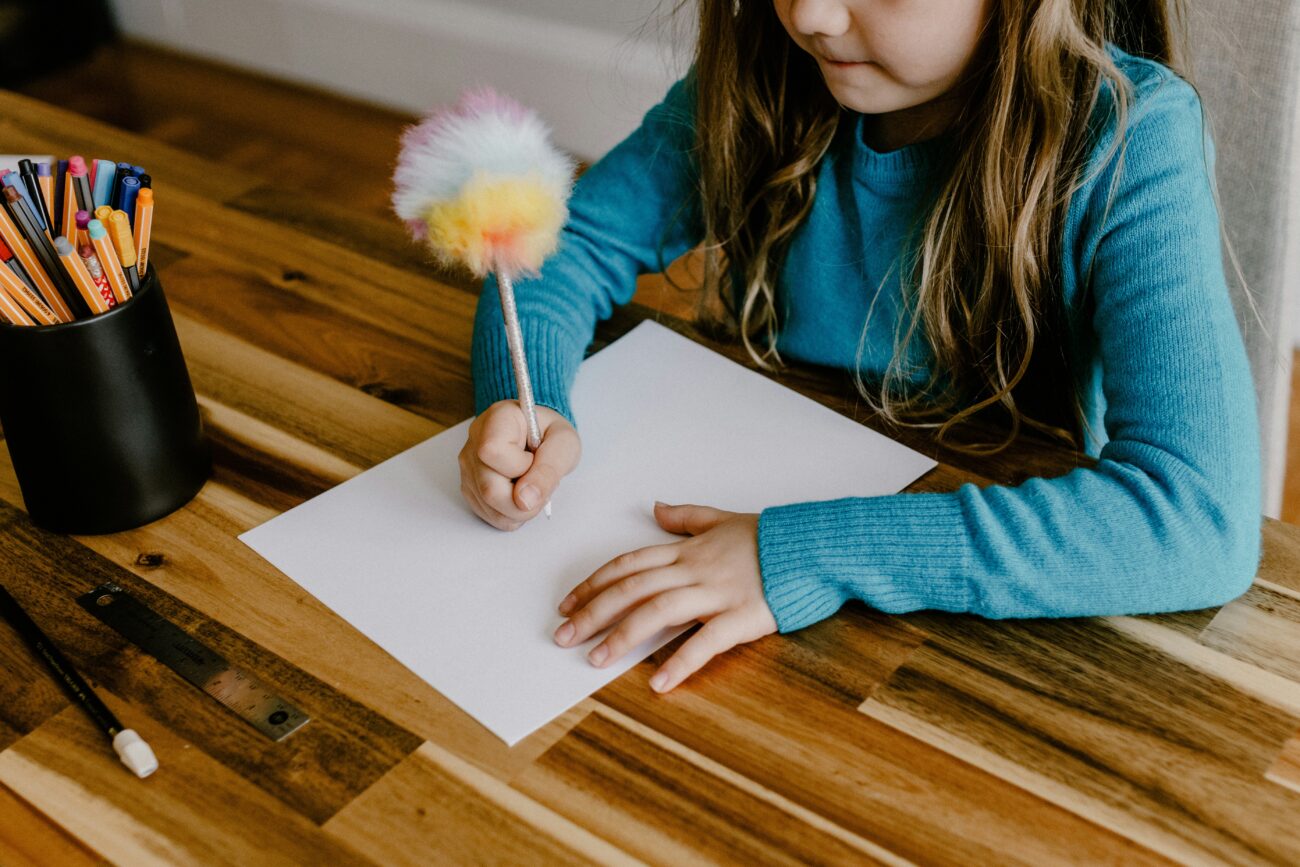
There’s something quietly powerful about a child putting pen to paper and discovering that their thoughts can take shape in words. In an age of constant screens and instant communication, encouraging children to write isn’t just about building literacy skills, it’s about giving them a voice. Writing helps children make sense of their world, express emotions they may not yet know how to say aloud, and develop confidence in their own ideas. When we nurture this habit early, we’re not just teaching them how to write; we’re helping them learn how to think, imagine, and be heard. Here are 5 top tips you can use to encourage your child to write.
1.Write about something they love.
Give your child the choice about the subject that they write about. Writing is always easier and more natural when they know the subject well and are enthusiastic about it. Whether their interests are football, animals, swimming, gymnastics or even computer games, they can use this as a starting point for their writing. You could even base a piece of writing on a day out associated with their interest. If the activity allows, they could take a small notebook or clipboard with them to gather ideas while they are there.
2. Generate ideas before starting to write.
Writing is easier if your child has a plan of the things they are going to write about. If they generate their ideas before they start to write, the process is far less overwhelming. Children can worry when they feel that they have too many things to think about at once. By getting their thoughts onto paper before constructing sentences, the writing experience is broken down into far more manageable chunks.
There are many ways to generate and gather ideas for writing. Mind-mapping is a good way of quickly putting ideas onto paper. Another strategy is to record their ideas onto a sound recorder or phone to play back as they write. A bullet-pointed list can also be an easy way to get their thoughts onto paper. For children who enjoy drawing, a story-board format can be a great way to motivate them to record their ideas.
3. Different types of writing.
Writing doesn’t have to be the traditional long-winded storytelling which some children find off-putting. By thinking out of the box, your child can be inspired to write in different ways. Here are some examples that you could ask your child to choose from:
- Writing lists can make the task seem less over-facing. Shopping lists, a list of items to take on holiday, a list of instructions, a list of their favourite places or a list of things to do… there are so many possibilities!
- Labelling a picture is a fun way of inspiring writing for a child who enjoys art. A labelled picture of a character or setting could be used to form the basis of a short story.
- Designing a comic strip is another way of combining art with writing. It also encourages them to think creatively about the characters they write about.
- Story dice can add a fun twist and help to turn writing into a game.
- Writing just one sentence at a time can be a good way to get them to make a start without the task becoming overwhelming.
- Add a competitive element! Encourage your child to enter writing competitions.
4. Give writing a purpose
Motivation is increased when there is a clear purpose for writing. You might ask your child to write a list of instructions to tell someone how to complete a task. Being the ‘expert’ giving the instructions can also increase the desire to write.
The good old-fashioned postcard is another way to make writing fun. Postcards have limited space, building awareness of the need to be concise and focused with their words. Understanding the need to write the address clearly, attach a stamp and post the post card are also important life skills. The subject matter can also be a motivator. Holidays and postcards go hand-in-hand and writing to a friend or relative about something enjoyable can be a good way to encourage writing.
Writing can also be incorporated into play. For example, a secret mission might be used to give the opportunity to write clues and secret codes. Sharing the mission with their friends encourages a collaborative approach which adds to the enjoyment.
Letter writing is another example of writing for a purpose. Writing to friends or family who would be willing to send a reply is a great way forward. For older children, it can be helpful to have a real reason to put pen to paper. Letters of thanks, enquiry or complaint can work well, especially if they receive a favourable reply!
5. Give your child the correct tools for the job.
Place value upon writing by giving your child stationery that they will enjoy using. Equipment that they enjoy and have chosen themselves can make all the difference. You could even incorporate a trip to the stationery shop into the writing experience. Having a choice about the pens and paper that they use gives children ownership of the writing therefore increases their motivation.
If you would like more practical hints and tips, please visit Succeed Education Online where you can access two free PDF resources.
About the Author
Jane is the founder of Succeed Education, offering in-person lessons and online courses to children. As her business name suggests, her passion lies in helping others to ‘Succeed.’ With 25 years of experience as a teacher, she has developed the ‘SUCCEED- Straight to Success’ teaching methodology. This is a back-to-basics approach to teaching and learning which focuses on creating a clear, step-by-step pathway to success.