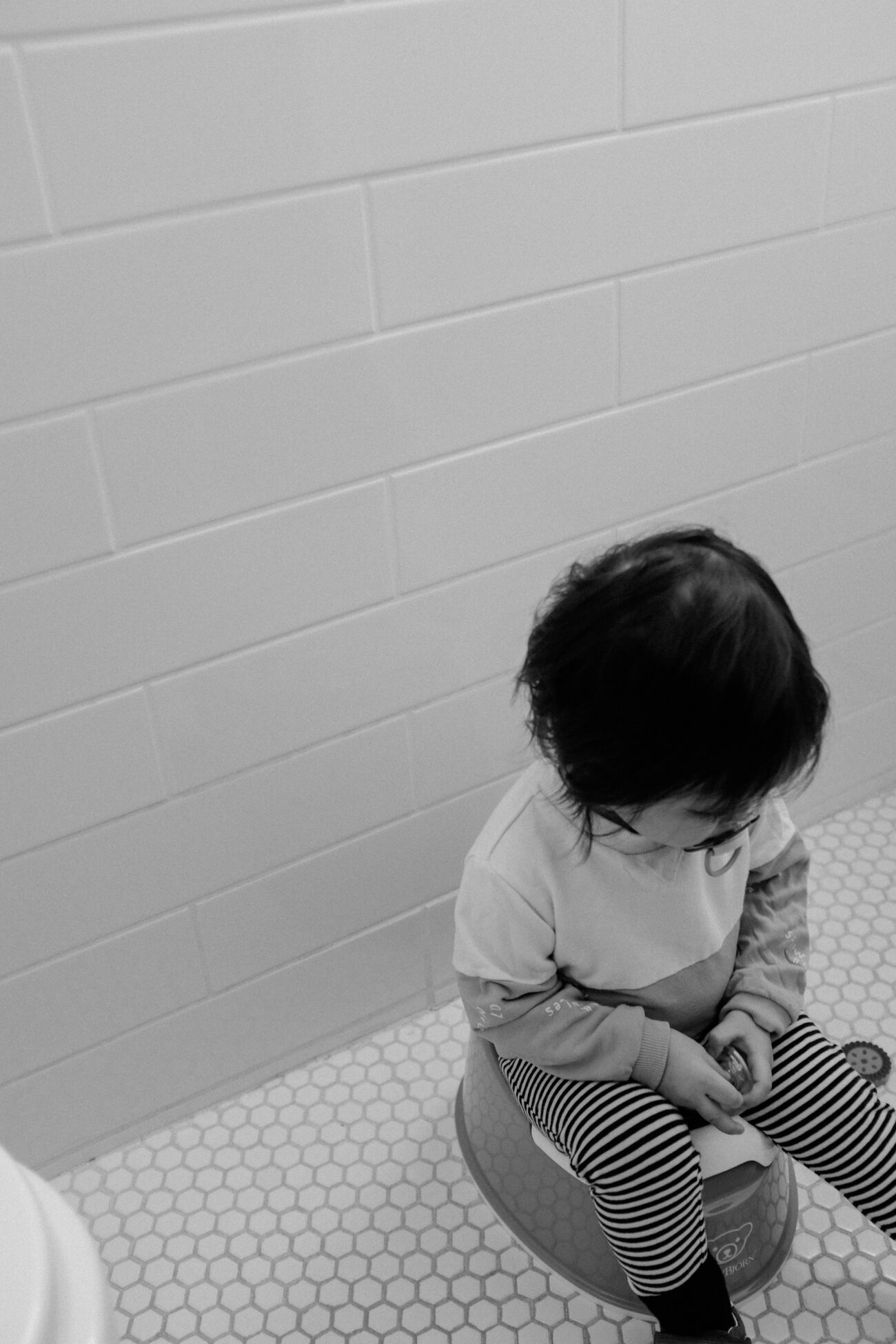
As a potty learning expert, there are two areas where I consistently see parents getting confused or misinformed about. The first is how early children can begin learning potty skills. The second is how to recognise and respond to constipation.
Around 90% of the cases I treat as a potty learning consultant involve children experiencing constipation. In many cases, this has usually gone unrecognised because the signs in children can look so different from what we expect in adults.
Why do children become constipated?
Constipation rarely develops overnight. It tends to build up gradually, often going unnoticed until it starts to affect your child’s behaviour, mood, or confidence around using the potty or toilet. It is often not picked up until the point parents try to help their child stop using nappies and they find they are getting into problems with potty training. Many children don’t have the language or body awareness to tell you that something feels uncomfortable, so the signs show up in other ways.
The most common causes of constipation in children include;
- low fibre intake,
- insufficient hydration,
- withholding behaviours at the start of potty training,
- lack of physical activity
- and reduced body awareness due to prolonged nappy use.
Some children are also more likely to develop constipation as a result of medication or if they have neurodevelopmental differences (e.g. ADHD, Autism) that can affect awareness, routine or sensory processing.
The signs most parents are told to look for
The NHS suggest the following 7 indicators of constipation:
- Doing fewer than three poos in a week;
- Large, hard poos
- Small pellet poos
- Experiencing straining or pain when pooing
- Bleeding after a large hard poo
- Having tummy ache or a poor appetite that gets better after a poo
- Soiling (poo in pants)
These are helpful, but they don’t tell the whole story.
Nurse Rebecca Mottram’s 16 signs of constipation in children
- Not having a poo every day/every other day.
- Pooing more than three times a day (this can be a sign that the bowel is full and is overflowing)
- Soiling in pants. (The poo might be hard or soft, or even liquid, which indicates fresh poo that has managed to get around a blockage of older, harder poo that is sitting in the bowel)
- Fear or refusal of the toilet or potty.
- Avoiding doing a poo/withholding.
- Waiting until they have a nappy on (e.g. at night), or only being willing to poo in a nappy
- Poos that are wider than the child’s wrist.
- Poos that may block the toilet.
- Tummy ache or a distended/swollen tummy.
- Really smelly poo/wind, or bad breath.
- Poor appetite or feeling sick.
- Irritability or upset, especially leading up to doing a poo, then happy and relaxed afterwards.
- Day or night time wetting.
- Urinary tract infections.
- Tiredness and lack of energy.
- Disturbed sleep.
If your child has 2 or more of these symptoms, you should contact your GP. The earlier constipation is identified, the easier it is to treat.
What are the risks of childhood constipation?
Constipation isn’t just about poo. It can have a wide impact on your child’s physical and emotional wellbeing. If left unresolved it can lead to:
- Painful pooing
- Anal fissures (small tears)
- Faecal impaction
- Bladder problems
Just as importantly, it can create a pain–avoidance cycle. If pooing hurts, children naturally start to hold it in. This leads to more constipation, which leads to more pain and the cycle continues.
This is often where potty training becomes difficult or breaks down entirely.
How is childhood constipation treated
A GP can prescribe a macrogol laxative such as Movicol, Cosmocol or Laxido. They come in sachets, in the form of powder. When the powder is mixed with the water, it creates a solution that cant be absorbed by the body, so its oftens the poo and helps it pass along and out the other end, moving the poo along with it.
Alongside medication, its important to support your child with:
- Regular toilet opportunities
- A relaxed, pressure-free approach to help them feel less anxious about doing a poo
- Good fluid intake
- A balanced diet
Overcoming constipation can take several months because it’s not just about clearing built-up poo and keeping stools soft. It also involves allowing the bowel to recover, and helping your child rebuild confidence and more positive, relaxed associations with pooing.
About the author
Nurse Rebecca Mottram is a children’s nurse and potty learning expert, offering gentle, child-centred and evidence-based guidance to make potty training playful, practical, and tailored to your unique child’s needs and temperament.